

WisePeople
Building a single design team from five different ways of working.
WisePeople is a software house and technology partner delivering digital products across a wide range of industries, from services and e-commerce to complex B2B systems, platforms, and applications.
The design team works on multiple products simultaneously, often for very different businesses and user groups. This makes consistency especially important. The quality of a project cannot depend on which designer happens to be leading it.
The challenge was therefore broader than improving individual interfaces. We needed common foundations for how projects are structured, estimated, designed, reviewed, documented, and handed over to development.
One team, common standards
I am developing a shared design system and UI Core, creating reusable tools and templates, organizing workflows in Figma, and establishing common standards for UX, accessibility, documentation, and handoff.
At WisePeople, I am responsible for the substantive leadership of a five-person design team and for developing a shared design culture across projects.
When I took on this role, designers had developed their own ways of working. Figma structures differed between projects, components were created independently, values were often entered manually, and reusable solutions were not systematically carried over from one product to another.
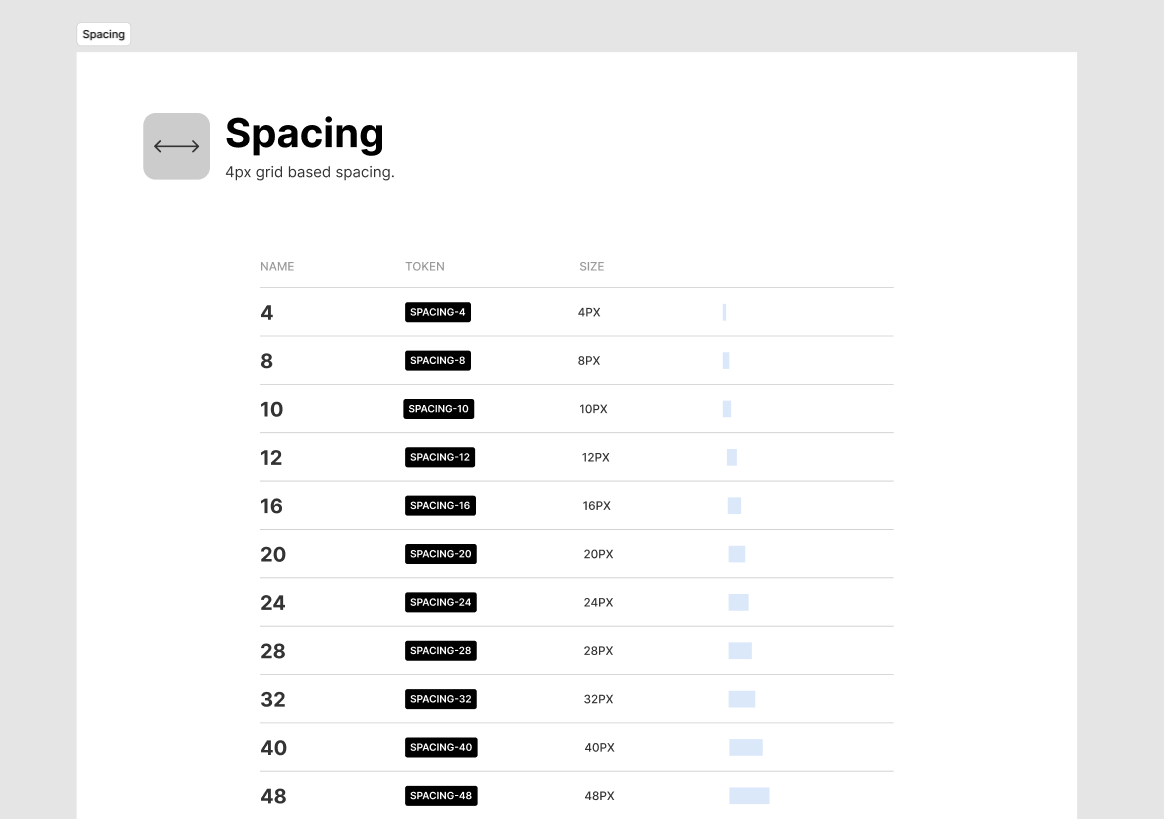
One of the first major changes was building a company-wide design system based on tokens, responsive components, Figma Variables, and Modes. Instead of maintaining disconnected styles or repeatedly entering values by hand, the team can now work on shared foundations that are easier to maintain, adapt, and scale.
The same principle applies beyond the design system. We treat each project as a potential source of new patterns, components, tools, and knowledge.
Every project should leave behind something that makes the next one easier, faster, or better.
My role
I combine design leadership with hands-on product work. I still lead my own projects, design SaaS products, conduct UX audits, and take responsibility for UX quality across selected projects delivered by other designers.
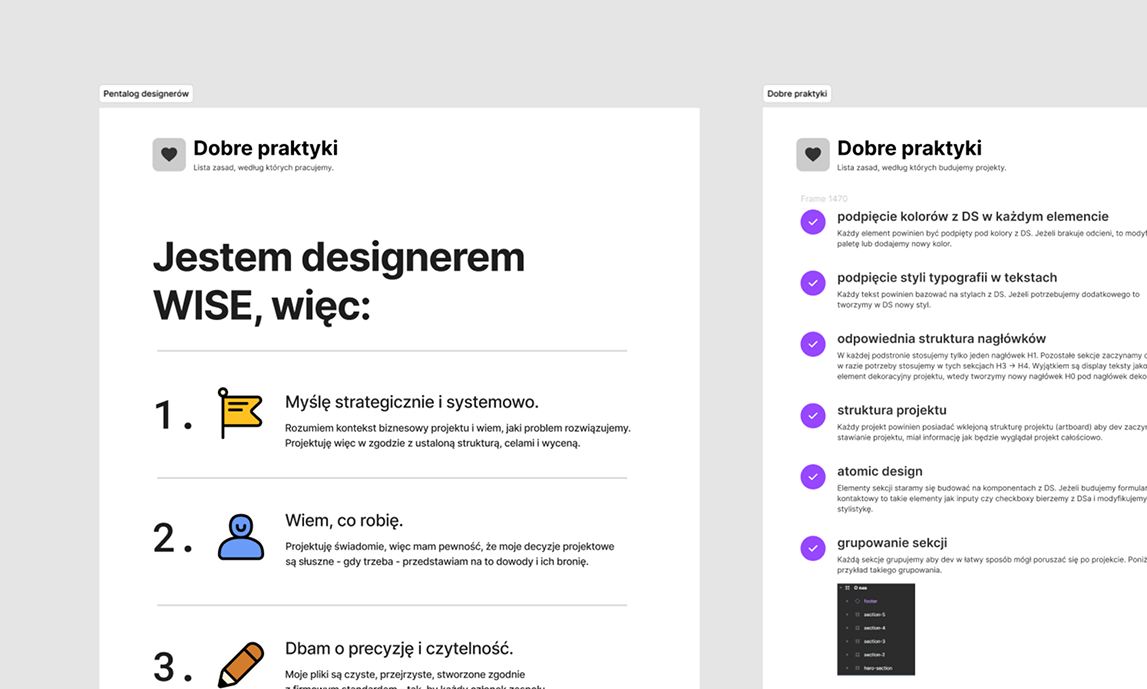
A significant part of my role is improving the environment in which the whole team works. I review projects regularly, introduce standards, discuss design decisions with the team, and establish shared quality control through peer review rather than relying solely on individual designers to validate their own work.
I initiated the development of internal Figma plugins and workflow tools, which the team built under my direction. They help automate repetitive tasks such as adapting designs to different resolutions, assigning elements to key visuals and components, generating recurring mockups, and checking selected WCAG requirements.
We also improved the way Figma itself is used across the team. Shared Variables, Modes, responsive components, tokens, and structured libraries replaced many manually recreated values and one-off solutions.
My responsibilities also include the development of individual designers. Through regular conversations and dedicated interviews, each person has a clearer direction for professional growth, areas to strengthen, and competencies to develop.
I also participate in recruitment and help determine how the team’s competencies should evolve in response to the types of projects we want to deliver.
Leading a 5-person design team
processes, standards, and work organisation
Building a tokenized design system from scratch
Figma Variables, Modes, and responsive components
Peer review and shared quality control
Individual development paths for every designer
WCAG and GEO as part of the design standard
Introducing UX audits into the offering
Custom Figma plugins, automation, and templates
More UX, less design by intuition
One of my main goals was to move the team towards a more mature Product Design practice, where interface decisions are supported by research, data, user behavior, and clearly defined requirements.
Today, we place much greater emphasis on UX analysis, audits, analytics, heatmaps, user behavior, accessibility, and the context in which a product will actually be used.
UX audits have also become part of our offering rather than something performed only occasionally. This gives us another way to support clients before a redesign begins and helps us identify problems based on evidence instead of assumptions.
Accessibility is increasingly treated as a design requirement from the beginning. The team works with shared WCAG standards, supported by internal tools that make selected checks easier to perform directly during the design process.
The same applies to GEO. Content structure, information hierarchy, headings, and the way key information is organized are considered early in the project rather than being treated as an optimization added at the end.
We have also significantly changed how projects are estimated. Instead of listing only templates or page names, we break them down into their actual structure. Pages are divided into sections, sections into their content and functionality, and the complexity of individual elements can be considered before design work starts. This makes estimates more precise, exposes complexity earlier, and gives design and development a much clearer picture of what is actually being built.
Internal automation further reduces repetitive production work. Reusable templates, components, plugins, and automated mockups allow designers to spend less time recreating common structures and more time solving project-specific problems.
Results and conclusions
The most important result is not a single design system, plugin, or process improvement. It is a more systematic way of working across the entire design team.
A shared design system, tokenized foundations, responsive components, templates, automation, and greater reuse already reduce the amount of repetitive work required in selected stages of the process.
Approximately 20% estimated time savings in streamlined stages of the process.
At the same time, the benefits go beyond efficiency.
Projects are now reviewed against shared standards. Designers use common foundations while retaining their individual specializations and ways of thinking. Figma files are more structured, reusable solutions remain within the organization, and repetitive tasks are increasingly automated.
Estimations provide a more accurate representation of actual product complexity. UX, accessibility, analytics, and GEO are considered earlier. Design decisions are discussed and reviewed instead of being made entirely in isolation.
Every designer also has a clearer direction for professional development, while the team as a whole has a better understanding of what quality means at WisePeople.
The goal was never to make five designers work in exactly the same way. It was to give five different designers the same strong foundation to work from.
And that foundation continues to improve with every project.