


About the project
Two products, one clinical process
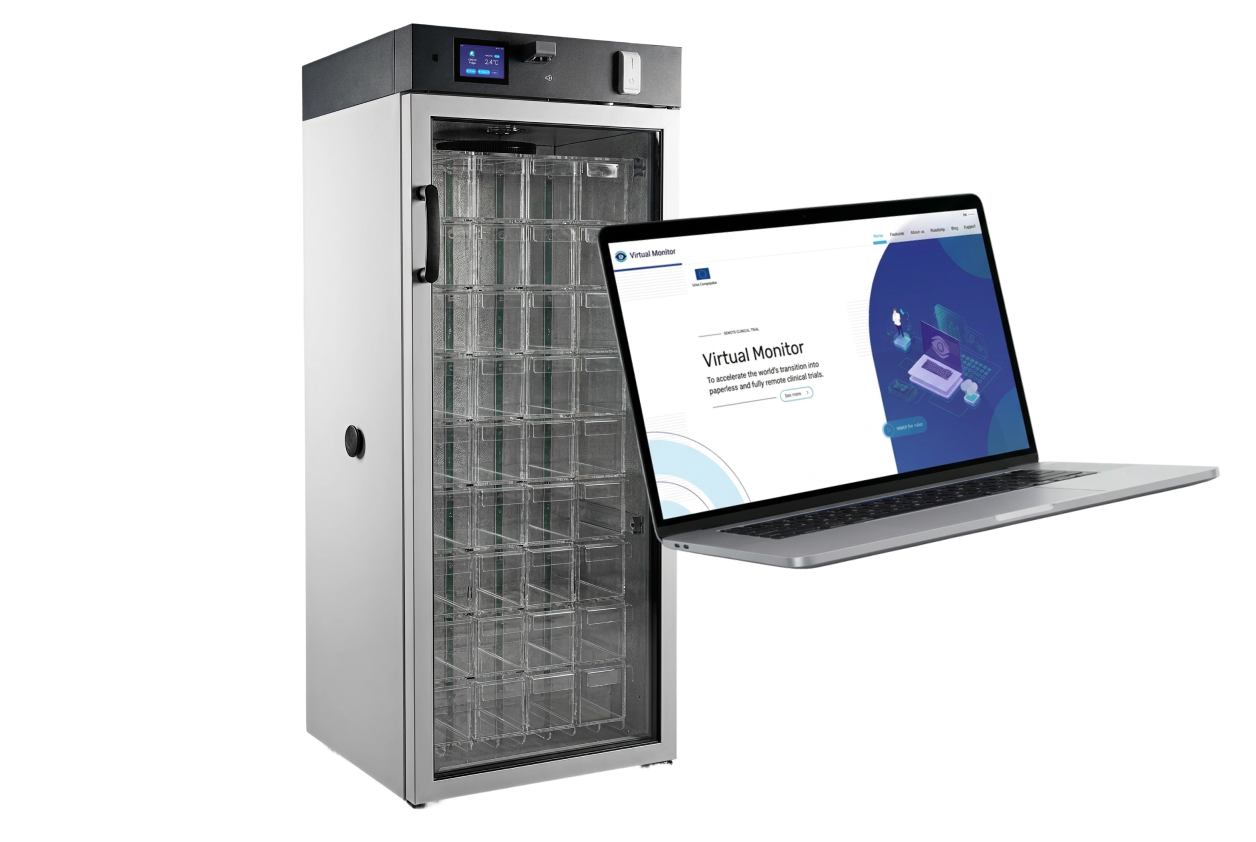
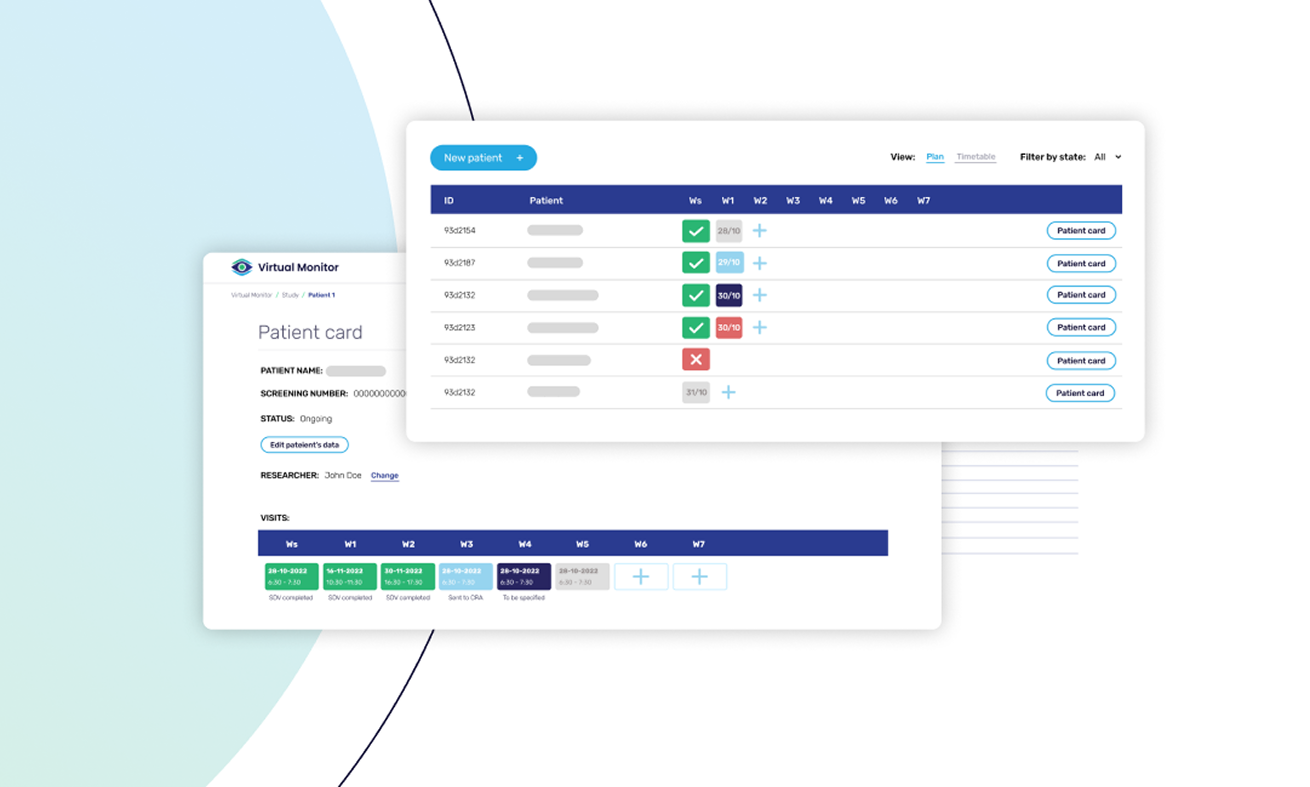
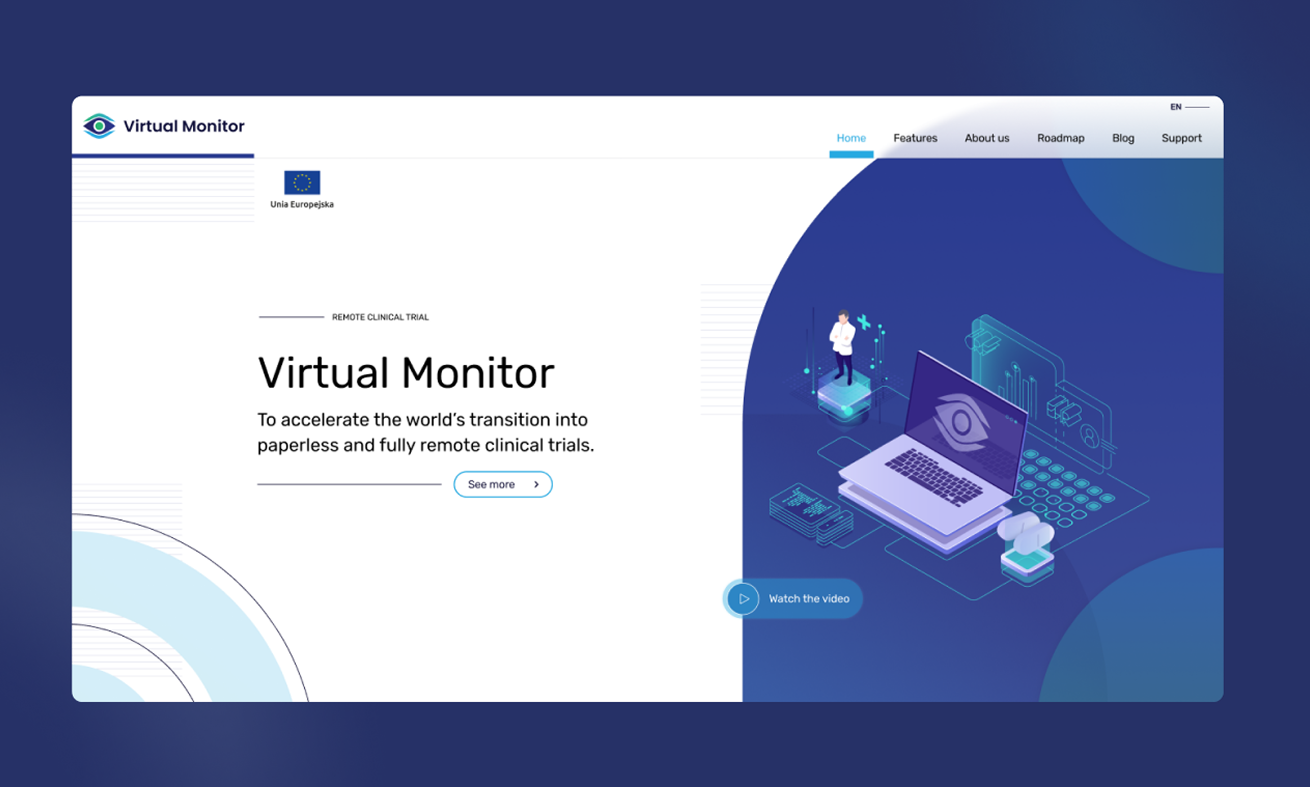
The Virtual Monitor was designed to support the organization of clinical trials in areas not covered by standard eCRF systems. The platform was intended to facilitate communication among process participants, task coordination, status monitoring, documentation management, and the organization of information scattered among various roles.
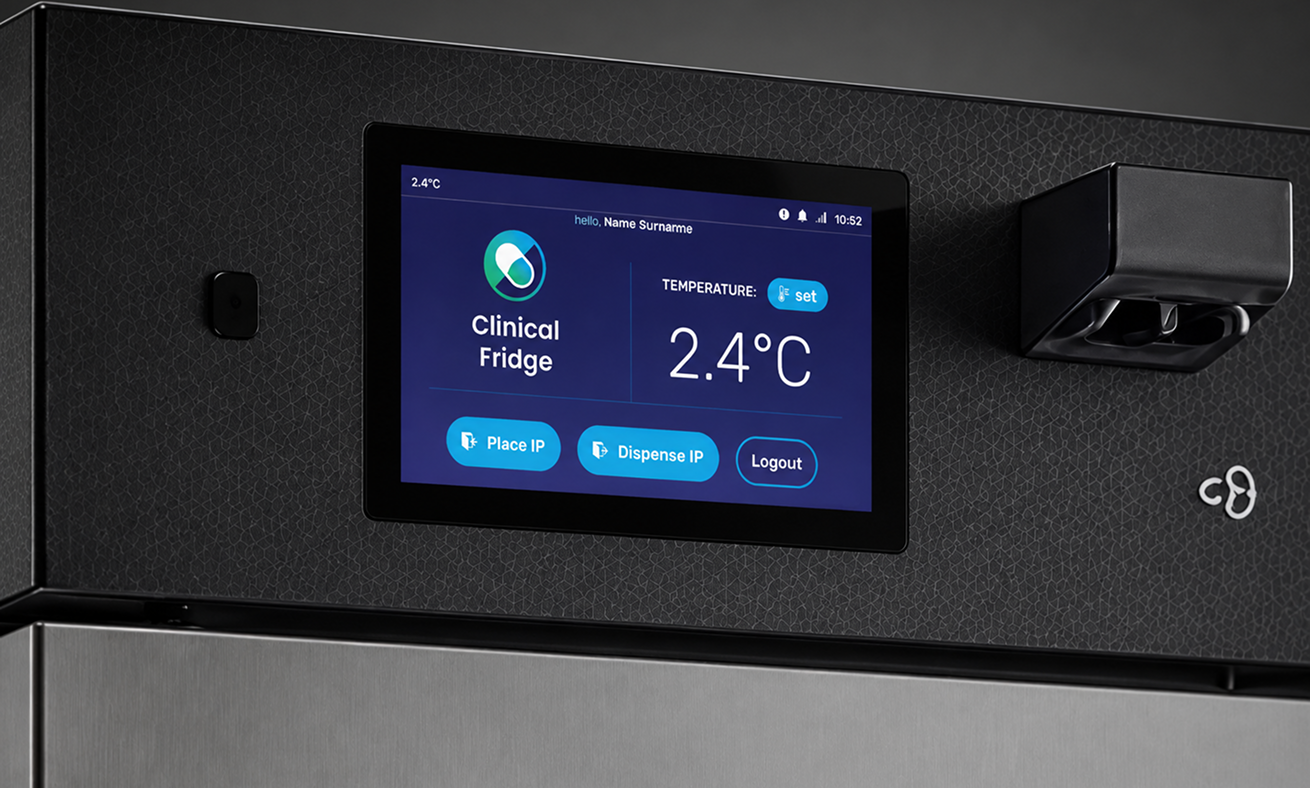
The Clinical Fridge expanded this ecosystem with a physical layer. It was an IoT system supporting work with samples and medications in the research facility. Its purpose was to ease the location of the correct sample, automate the issuance log, reduce the risk of errors, and shorten the time needed for patient handling.
Together, the products created a system that connected the digital process with real work in the research facility.
My role
From the clinical process to the IoT device screen. I was responsible for designing the experience of both products and the consistency of the entire ecosystem.
Full UX research
design of a multi-level web platform
design of the operation and interface of the IoT device
Building a cohesive ecosystem from two products
I was responsible for the end-to-end design process, from understanding the domain and user research, through defining processes, information architecture, and user flows, to prototyping, UI design, usability testing, and subsequent product iterations. For the Clinical Fridge, I also designed the interface of the physical device, the Design System, and the external PWA application.
Problem
Clinical trials generate many processes, documents, and communication between sites, sponsors, CROs, monitors, and researchers. Many of these activities are repetitive and can be automated, but there is a lack of tools to enable this.
Clinical trials are a complex process involving many organizations, roles, and tools. A large part of the work relied on manual information exchange, forms, visit planning, and coordination between research sites, monitors, CROs, and sponsors. The goal was to identify areas where technology could streamline these processes, reduce manual work, and provide better access to information.
Users and context
The platform served four main user groups, differing in role, scope of responsibility, and information needs:
Research sponsors and CROs.
Organizations responsible for conducting and overseeing studies, working with data from multiple research sites.
Clinical trial coordinators.
Individuals responsible for organizing and coordinating the course of the study within a specific site.
Researchers,
i.e., doctors conducting clinical trials involving patients.
CRAs,
Clinical Research Associates representing CROs or sponsors, responsible for ensuring the proper conduct of the study at the sites.
The project required an understanding of the entire ecosystem of clinical trials, not just the needs of a single user. Each role worked with different data, performed different tasks, and communicated information between organizations. Therefore, it was crucial to understand the dependencies between them and design a solution that supports the entire process.
Research
Problems were identified based on:
- user interviews,
- observations of work in real environments,
- testing of designed solutions,
- analysis of existing processes and materials.
A significant portion of the research took place directly at research sites. I visited facilities in various parts of Poland, conducting interviews and observing the actual workflow of clinical trial participants.
This allowed me to see how the process works in practice, not just in documentation and business requirements. The identified problems, dependencies, and repetitive tasks were translated into insights, user flows, and subsequent iterations of designed solutions.
Research was not a separate phase of the project. Research, prototyping, and usability testing accompanied product development throughout the entire design process.
Solutions
From research insights to two complementary products
Based on observations, interviews, and tests, we developed two solutions addressing different problems encountered in the clinical trial process.
The Virtual Monitor supported the organization and automation of work related to conducting studies. It organized visit planning, forms, data, and the flow of information between research sites, monitors, CROs, and sponsors. The goal was to reduce manual tasks and consolidate scattered processes in one environment.
The Clinical Fridge expanded this ecosystem with a physical IoT device for managing substances used during studies. The solution included the device’s operational logic, user interface, Design System, and a PWA application enabling its configuration, operation, and management.
Both products were developed iteratively, based on observations of users’ actual work and subsequent tests of designed solutions.
Effects and conclusions
After the implementation:
8 PROTOTYPE CLINICAL FRIDGE DEVICES WERE DEPLOYED TO RESEARCH SITES
THE SOLUTION WAS INTEGRATED WITH EHR AND CRF SYSTEMS
THE PRODUCT WAS IMPLEMENTED IN A CONTROL STUDY AND SOLD TO A PARTNER IN SOUTH KOREA
The outcome of the project was the transition from research and prototyping to a solution operating in the real environment of clinical trials. The Clinical Fridge and Virtual Monitor were tested at research sites, integrated with the existing EHR and CRF ecosystem, and utilized in a control study.
The project confirmed both the usability of the solution and its business value; ultimately, the technology was sold to a partner in South Korea.